
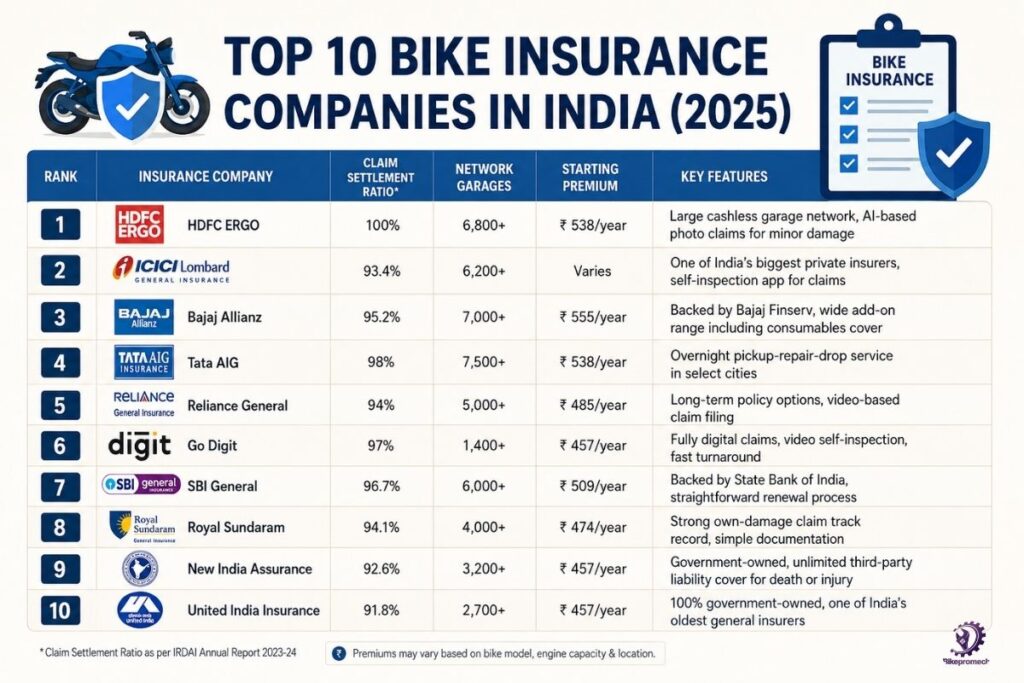
Bike Insurance Companies 2026 include HDFC ERGO, ICICI Lombard, Bajaj Allianz, Tata AIG, Reliance General, Go Digit, SBI General, Royal Sundaram, New India Assurance, and United India Insurance. Third-party premiums are fixed by IRDAI and identical across all of them; what actually varies is the own-damage premium, claim settlement speed, and cashless garage network.
This is general information, not financial advice. Claim settlement ratios and premiums change every financial year, so verify current figures on the IRDAI website or directly with the insurer before buying.
What are the top 10 bike insurance companies in India?
- HDFC ERGO – large cashless garage network, AI-based photo claims for minor damage
- ICICI Lombard – one of India’s biggest private general insurers, self-inspection app for claims
- Bajaj Allianz – backed by Bajaj Finserv, wide add-on range including consumables cover
- Tata AIG – overnight pickup-repair-drop service in select cities
- Reliance General – long-term policy options, video-based claim filing
- Go Digit – fully digital claims, video self-inspection, fast turnaround
- SBI General – backed by State Bank of India, straightforward renewal process
- Royal Sundaram – strong own-damage claim track record, simple documentation
- New India Assurance – government-owned, unlimited third-party liability cover for death or injury
- United India Insurance – 100% government-owned, one of India’s oldest general insurers
How is third-party bike insurance priced in 2026?
Third-party premium is not something you can shop around for. IRDAI sets one fixed rate per engine capacity band, and every insurer in India charges exactly the same amount for it.
| Engine capacity | Annual third-party premium |
| Up to 75cc | ₹538 |
| 75cc to 150cc | ₹714 |
| 150cc to 350cc | ₹1,366 |
| Above 350cc | ₹2,804 |
| Electric, up to 3kW | ₹457 |
A Honda Activa or Hero Splendor owner pays ₹714 a year in third-party premium. A Royal Enfield Classic 350 owner pays ₹2,804, roughly four times as much, purely because of the larger engine. New two-wheelers are typically sold with a 5-year third-party policy bundled into the on-road price, so if you bought your bike new, this part is already handled for the first five years.
Also read – best selling two wheelers in india
What actually differs between insurers, then?
Own-damage premium is where insurers compete. This part of a comprehensive policy covers theft, accidental damage, and natural calamities to your own bike, and each insurer prices it differently based on your bike’s Insured Declared Value (IDV), your city, your No Claim Bonus, and the add-ons you choose.
For a bike under 5 years old, total comprehensive premium (third-party plus own-damage) typically runs between ₹1,500 and ₹4,000 a year, just a few hundred rupees more than third-party alone. Given the size of a potential repair bill after an accident or theft, most riders find the extra cost worth it.
What should you compare beyond price?
Premium is only one part of the decision. Before you pick an insurer, check these four things:
- Claim settlement ratio (CSR) – the percentage of claims an insurer actually pays out. IRDAI publishes this annually; a CSR above 90% is generally considered reliable, though it tells you nothing about how fast a claim gets paid.
- Cashless garage network – whether your usual mechanic or a garage near you is on the insurer’s list. A smaller network means you pay upfront and file for reimbursement instead of a cashless repair.
- Claim turnaround time – some insurers settle minor damage claims within hours through photo or video self-inspection; others still send a surveyor, which adds days.
- Add-on coverage – zero depreciation, engine protection, and roadside assistance are the three add-ons most riders end up needing at some point. Check what’s included versus what costs extra.
What add-ons are worth paying for?
- Zero depreciation cover – you get the full replacement cost of parts instead of a depreciated payout. Useful for bikes under 5 years old. Adds roughly ₹200-400 a year.
- Engine protection cover – pays for engine damage from waterlogging, a real risk in flood-prone Indian cities during monsoon. Adds roughly ₹150-300 a year.
- Roadside assistance cover – towing, emergency fuel, and flat tyre help through your insurer. Adds roughly ₹100-200 a year, though many riders now get this directly from a service provider instead of bundling it into the policy.
- Personal accident cover – IRDAI mandates a minimum ₹15 lakh personal accident cover for the owner-rider; confirm it’s included rather than sold as a separate add-on.
Also read – What is a two-wheeler RC book?
How does a claim actually play out after an accident?
Filing a claim is only half the process; getting your bike back on the road is the other half. Once your insurer approves the claim, you still need a workshop to carry out the accidental repair itself, whether that’s bodywork, a damaged engine, or replaced parts. Keeping your bike insurance active and your service records up to date makes this part faster, since insurers sometimes ask for maintenance history when assessing a claim.
Insurance covers the cost of damage; servicing prevents it
A good insurer pays out when something goes wrong. Regular periodic service reduces how often something goes wrong in the first place, whether that’s catching worn brake pads before they fail or spotting a battery on its way out during a routine check. BikeProMech’s doorstep mechanics handle periodic servicing, engine repair, bike battery replacement, and tyre changes at home across major Indian cities, with transparent pricing and a 10-day service warranty on every job. If you’re ever stranded after a breakdown, our roadside assistance team is a call away, and you can also buy bike insurance directly through BikeProMech.
Book a doorstep service with BikeProMech and keep both your bike and your insurance claim history in good shape.
Or visit our pages:
bike repair at doorstep
bike service in gurgaon
doorstep bike service pune
doorstep bike service bangalore
online bike service in hyderabad
best bike service center in coimbatore
FAQs – Bike Insurance Companies in India
There’s no single fixed best insurer. HDFC ERGO, ICICI Lombard, Bajaj Allianz, and Tata AIG are consistently ranked among the top for claim settlement ratio and garage network, but the right choice depends on your city, bike, and whether you value price, speed, or network size most.
Yes. Third-party premium is fixed by IRDAI based on engine capacity, so it’s identical no matter which insurer you buy from. Only own-damage and add-on pricing vary between companies.
For a bike under 5 years old, comprehensive insurance typically costs between ₹1,500 and ₹4,000 a year in total, combining the fixed third-party rate with a variable own-damage premium.
A claim settlement ratio above 90% is generally considered reliable. It measures whether a claim gets paid at all, not how quickly, so also check average claim turnaround time before choosing an insurer.
Yes. You can port to a new insurer at renewal without losing your No Claim Bonus, as long as you request an NCB certificate from your current insurer and switch before the policy lapses.