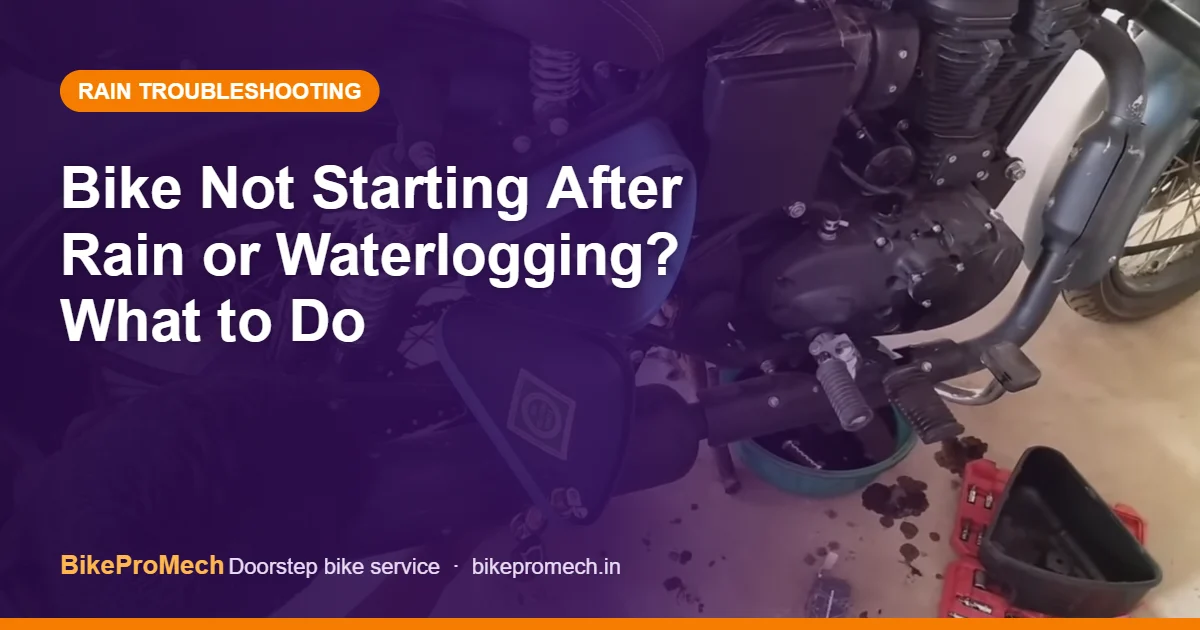


A bike that will not start after rain or riding through water usually has a wet spark plug, water in the air filter or exhaust, damp wiring connectors or a weakened battery. If the bike was submerged above the silencer or air intake, do not keep cranking it; water in the engine can cause serious damage.
First: How Deep Was the Water?
- Below the silencer: usually a wet plug or connectors. Dry and try again.
- Above the silencer or air intake: do not start the bike. Water may be inside the engine. Call a mechanic or roadside assistance.
Step-by-Step Checks (Water Below the Silencer)
- Switch off and wait 15–20 minutes.
- Remove the spark plug cap, dry the plug area, or remove and dry the plug if you know how.
- Check that the air filter box is not full of water.
- Tilt the bike to drain water from the silencer.
- Dry visible connectors near the headlight and under the seat.
- Try starting with short presses, not long cranking that drains the battery.

Prefer to talk? Call +91 90534 45344 or WhatsApp us to book a mechanic at your doorstep.
Common Causes and Fixes
| Cause | Fix |
|---|---|
| Wet spark plug or cap | Dry or replace the plug |
| Water in air filter | Drain the box; replace a soaked filter |
| Water in silencer | Drain and dry |
| Damp wiring / connectors | Dry, clean and seal |
| Water in engine oil (milky oil) | Do not ride; oil change and inspection |
After the Bike Starts
- Check the engine oil: milky oil means water got in.
- Clean and lubricate the chain the same day.
- Test the brakes; wet brakes need a few gentle presses to dry.
Prevent it next time with our monsoon bike care checklist and our guide to bike starting problems.
Why You Should Not Push-Start a Flooded Bike
If water has entered the engine through the air intake or exhaust, it can sit in the cylinder. Water does not compress like air, so cranking or push-starting the bike can bend internal parts. This kind of damage, often called hydrolock, is far more expensive than a mechanic’s visit. If the bike was submerged above the silencer, leave it switched off and get it inspected.
Scooters vs Motorcycles After Rain
Scooters sit lower, with the engine and CVT casing close to the road, so they take in water sooner. Water in the CVT casing can make the belt slip, causing poor pickup even after the scooter starts. Motorcycles usually have a higher air intake but an exposed chain and more exposed wiring. On both, the spark plug cap and the connectors near the battery are the first places to check.
What a Mechanic Will Check
| Check | Why |
|---|---|
| Spark plug and cap | Moisture stops the spark |
| Air filter box | Water in the intake can reach the engine |
| Engine oil colour | Milky oil means water got into the engine |
| Wiring and connectors | Water causes short circuits and corrosion |
| Battery | Repeated cranking drains it |
| CVT casing (scooters) | Water causes belt slip |
| Brakes and wheel bearings | Water washes out grease and causes rust |
How to Avoid This Next Time
- Avoid water deeper than the bottom of the silencer.
- If you must cross water, ride slowly and steadily without stopping, keeping the revs up.
- Park on higher ground during heavy rain.
- Get connectors checked and sealed before the monsoon.
Use our monsoon bike care checklist before the rains.
Quick Decision Guide
| Situation | What to do |
|---|---|
| Rode through shallow water, bike won’t start | Wait 15–20 minutes, dry the plug cap and connectors, try short starts |
| Water reached the seat or air intake | Do not start; call a mechanic |
| Bike starts but runs rough | Ride gently to a safe place and get it checked |
| Oil looks milky | Do not ride; oil change and inspection needed |
| Scooter starts but has poor pickup | Likely water in the CVT casing; get it inspected |
When in doubt, it is cheaper to call a mechanic than to risk engine damage. BikeProMech roadside assistance can inspect your bike where it stands, and our complete guide to bike starting problems covers causes that are not related to water.
The Bottom Line
When your bike won’t start after rain, the first question is how deep the water was. If it stayed below the silencer, the cause is usually a wet spark plug, damp connectors, water in the exhaust or a tired battery, and drying them out often solves the problem. If water reached the air intake or seat, do not crank or push-start the bike; water inside the engine can cause expensive damage. Check the oil for a milky colour once the bike runs, and dry and lubricate the chain the same day. When in doubt, call a mechanic, and prevent a repeat with a pre-monsoon check.
Frequently Asked Questions
Should I keep pressing self-start if the bike will not start after rain?
No. Short attempts only. Long cranking drains the battery and can damage the engine if water is inside.
How long does it take for a wet bike to dry out?
Often 15–30 minutes for a damp plug or connectors. Water inside the engine needs a mechanic.
Is insurance useful for flood damage?
A comprehensive policy may cover flood damage depending on terms; check your policy.
Can a mechanic come to me if my bike is stuck?
Yes. BikeProMech roadside assistance can inspect and fix the bike on the spot or advise next steps.
Will riding through a puddle damage my bike?
Shallow puddles below the silencer are usually fine if you ride slowly. Deep water is the risk.
What does milky engine oil mean?
Water has mixed with the oil. Do not ride the bike; it needs an oil change and an inspection.
Book Doorstep Bike Service with BikeProMech
Bike stuck after the rain? BikeProMech sends a verified mechanic to your home or office, shares the estimate before any work starts, and backs every job with a 10-day workmanship warranty. Doorstep inspection starts at ₹199. Call +91 90534 45344 or book online.
Help in Pune, Hyderabad, Chennai, Bangalore, Faridabad and more.
Sources: Hero MotoCorp Splendor maintenance schedule; Hero MotoCorp Splendor Plus maintenance guide.