
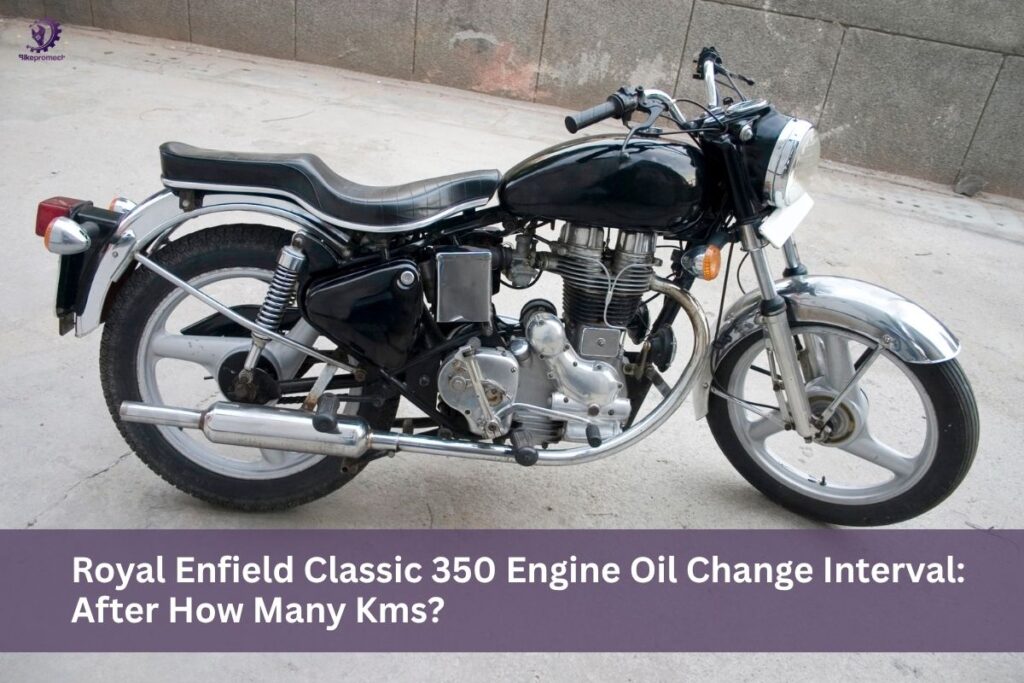
The Royal Enfield Classic 350 engine oil change interval is every 5,000 km to 10,000 km, or 6 to 12 months, whichever comes first, for the current J-platform bike. The exact number within that range depends on your model year and the type of oil you use. Older UCE-generation Classic 350 models need oil changed every 3,000 km.
What is the Royal Enfield Classic 350 engine oil change interval by oil type?
The single biggest factor inside that 5,000-10,000 km range is the oil you’re actually running. Mineral, semi-synthetic, and full-synthetic oils break down at different rates, so the interval shifts accordingly.
| Oil type | Recommended change interval |
| Mineral oil | Every 2,500 km to 3,000 km |
| Semi-synthetic oil | Every 4,000 km to 5,000 km |
| Full synthetic oil | Every 7,000 km to 10,000 km |
Royal Enfield’s factory-fill on the current J-platform Classic 350 is a JASO MA2-rated semi-synthetic, which is why the official interval sits in the 5,000-10,000 km range rather than at either extreme. If you’ve switched to full synthetic, you can safely run closer to the 10,000 km mark. If you’re topping up with mineral oil, plan on changing it every 2,500 to 3,000 km instead.

Which Classic 350 do you own, and why does it matter?
Royal Enfield sells two very different engines under the Classic 350 name, and the oil change interval depends on which one you have.
J-platform Classic 350 (2021-present) uses a 349cc single-cylinder engine with SAE 15W-50, API SL, JASO MA2 semi-synthetic oil as standard. This is the version currently on sale, identifiable by its dual-channel ABS and clean, ECU-controlled engine casing.
UCE-generation Classic 350 (2012-2021) needs oil changed every 3,000 km regardless of oil type, since the older engine design doesn’t hold up as long between changes.
If you’re not sure which one you have, check your registration date. Anything registered from late 2021 onward is almost certainly the J-platform.
Also read: Why is a throttle body used in a motorcycle engine
When should you change the oil sooner than the standard interval?
A few riding scenarios call for shortening the Classic 350 engine oil change interval below whatever your oil type would normally allow:
- New bike break-in. The first oil change is mandatory at 500 km to 1,000 km, well before any of the standard intervals apply, to clear out metal particles from the engine bedding in.
- Heavy city traffic. If most of your riding is stop-and-go, change oil closer to 2,500 km to 3,000 km, even on semi-synthetic or synthetic oil, since short trips prevent the engine from reaching a temperature that burns off moisture in the oil.
- Performance modifications. Bikes with aftermarket exhausts, remapped ECUs, or other performance upgrades put extra load on the engine. Reduce your interval by roughly 500 km from whatever your oil type would normally suggest.
What is the official service schedule for the current Classic 350?
Beyond the oil change itself, Royal Enfield’s factory schedule for the J-platform Classic 350 follows this pattern:
| Milestone | What happens |
| 500 km – 1,000 km | Mandatory first oil change (break-in service) |
| 5,000 km | Oil change or level check, depending on oil type used |
| 10,000 km | Full oil and filter change, plus valve clearance check |
| 15,000 km | Oil change or level check, depending on oil type used |
| 20,000 km | Full oil and filter change, plus valve clearance check |
Valve clearance inspection is bundled with every 10,000 km oil change, since both jobs need the engine top cover off anyway.
How much oil does the Classic 350 need, and what type?
A routine oil and filter change takes 1.7 litres. A complete dry fill, such as after an engine rebuild, needs 2.2 litres. The specification is SAE 15W-50, API SL grade, JASO MA2-rated semi-synthetic oil.
The JASO MA2 rating matters more than most riders realise. The Classic 350 runs a wet clutch, meaning the clutch plates sit in the same oil as the engine. A car engine oil, or any oil without the MA2 friction rating, will make the clutch slip. This is one of the most common mistakes riders make when switching oil brands.
Do riding conditions affect the interval beyond oil type?
Oil type sets the baseline, but Indian riding conditions can justify shortening the Classic 350 engine oil change interval further still.
Dusty or unpaved roads. Fine dust that gets past the air filter contaminates oil faster, particularly on bikes ridden regularly outside major cities.
Heavy monsoon riding. Water intrusion through the engine breather is a real risk during waterlogging. If you’ve ridden through standing water, check the dipstick for a milky, cloudy tint, a sign of water in the oil that needs an immediate change regardless of kilometers covered.
For riders facing either of these on top of heavy traffic, staying at the lower end of your oil type’s interval range, or even 500 km under it, is a reasonable, low-cost way to protect the engine.
What are the signs your Classic 350 needs an oil change sooner than scheduled?
Don’t rely on the odometer alone. Watch for:
- Dark, sludgy oil on the dipstick, instead of the clear amber-brown color of fresh oil
- Louder engine noise than usual, especially a knocking or ticking sound
- Reduced fuel efficiency for the same riding pattern
- Clutch slipping, since degraded oil affects the wet clutch’s friction as much as engine lubrication
- Milky or cloudy oil, which signals water contamination and needs immediate attention
Our detailed checklist on how to know if your bike needs an oil change covers these signs in more depth if you’re unsure whether to wait for the scheduled interval.
What happens if you skip oil changes on a Classic 350?
Old oil loses viscosity and its ability to carry heat away from the engine. On an air-oil-cooled engine like the Classic 350’s, oil does more of the cooling work than on a fully liquid-cooled bike, so neglecting oil changes raises the risk of overheating, blown gaskets, or in extreme cases, a seized engine. It also increases wear on the wet clutch and valve train over time, both of which are far more expensive to fix than a routine oil change.
If you’ve already gone well past your due interval and are noticing rough running or unusual noise, get an engine repair inspection before the problem compounds.
Keep your Classic 350 running the way Royal Enfield built it to
Whether your Classic 350 is due for its 5,000 km check or a full 10,000 km oil and filter change, getting it done on schedule protects the engine and the wet clutch alike. BikeProMech’s mechanics bring periodic servicing, full oil and filter changes, and engine repair straight to your doorstep across major Indian cities, using the correct JASO MA2-rated oil for your bike, with transparent pricing and a 10-day service warranty on every job.
Book a doorstep service with BikeProMech and keep your Classic 350’s engine and clutch protected on schedule.
FAQs – Royal Enfield Classic 350 Engine Oil Change Interval
The current J-platform Classic 350 (2021 onwards) needs a full oil and filter change every 10,000 km or 12 months, with a level check at 5,000 km. Older pre-2021 models need oil changed every 3,000 to 5,000 km.
SAE 15W-50, API SL grade, JASO MA2-rated semi-synthetic oil. The JASO MA2 rating is essential because the Classic 350 has a wet clutch, and non-MA2 oils can cause clutch slippage.
1.7 litres for a routine oil and filter change, or 2.2 litres for a complete dry fill.
Royal Enfield’s official specification is semi-synthetic, and most riders stick to the manufacturer-recommended grade and interval rather than experimenting with synthetic oils and extended intervals, since doing so isn’t officially validated by Royal Enfield.
Yes. Frequent short trips and stop-and-go traffic prevent the engine from reaching a temperature that burns off moisture in the oil, so shortening the interval to 6,000-7,000 km is a reasonable precaution for city-heavy riders.