

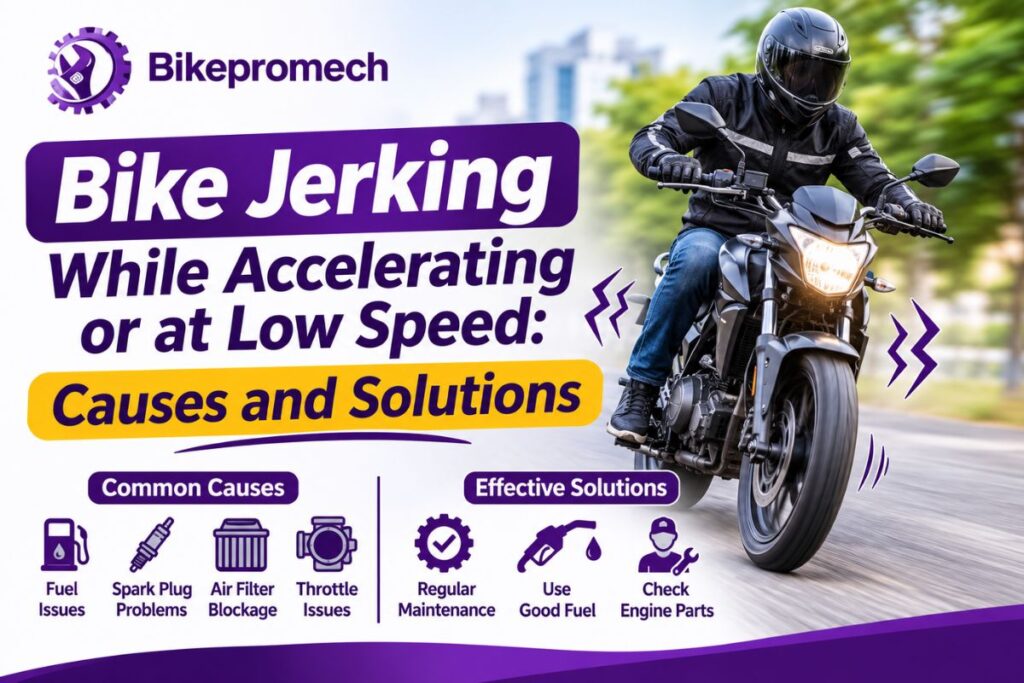
A bike that jerks while accelerating or at low speed is almost always suffering from a fuel, air, or spark problem: a dirty air filter, a fouled spark plug, a clogged carburetor or throttle body, or restricted fuel flow. Less often, the jerk comes from the drivetrain, such as a loose chain or a slipping clutch, or from a sensor fault on a fuel-injected bike. Most of these are inexpensive to fix, so start with the air filter, spark plug, chain, and fuel before assuming something serious.
This guide helps you match the jerk to its likely cause, run a 10-minute check yourself, and know when to hand the bike to a mechanic. It covers carbureted bikes, fuel-injected bikes, and automatic scooters.
Quick Diagnosis: When Does the Jerk Happen?
The moment the jerk shows up is the best clue. Use this table first.
| When It Jerks | Most Likely Causes |
| Light throttle at low speed (under 30 km/h) | Dirty pilot jet or carburetor, fouled spark plug, throttle body deposits, loose chain |
| Hard acceleration or overtaking | Clogged air filter, restricted fuel flow, weak spark, worn clutch |
| Only when cold, smooth once warm | Carburetor choke or mixture setting, thick or stale fuel, throttle body deposits |
| When you close the throttle or slow down | Chain slack or worn sprockets, lean idle mixture, idle speed set too low |
| At take-off on an automatic scooter | Worn clutch pads or springs, tired drive belt, worn rollers |
| Only after rain or a puddle | Moisture in the spark plug cap or ignition, water in fuel |
| After the bike sat unused for weeks | Stale fuel, gummed carburetor jets, weak battery |
| With a dashboard fuel-injection or engine warning light | Sensor fault, such as the throttle position sensor |
Why Do Bikes Jerk Mostly at Low Speed?
At low speed and light throttle, the engine runs on a very small amount of fuel and air, so any imbalance shows up immediately. In a carbureted bike, this small-throttle range depends on the pilot jet and idle circuit, which are among the first parts to clog. In a fuel-injected bike, the control unit relies on accurate sensor readings and a clean throttle body at small throttle openings. A weak spark or a loose chain also feels much rougher at low rpm because there is less momentum to smooth things out. The result is a lean mixture, a misfire, or a sudden slack-and-grab in the drivetrain, and you feel each one as a jerk.
10 Common Causes of Bike Jerking and How to Fix Them
1. Clogged Air Filter
A dirty filter starves the engine of air, so the mixture runs rich and the bike hesitates, coughs, or loses pickup, especially under hard acceleration. Dusty roads and construction zones clog filters quickly. Fix: Clean a foam element or replace a paper element. Most riders need to replace paper elements around every 10,000 km, sooner in heavy dust.
2. Fouled or Worn Spark Plug
A plug coated in carbon or worn at the electrode makes a weak, inconsistent spark, which causes misfires that feel like jerks at low speed. Short city trips and stop-and-go traffic build up carbon fast. A loose plug cap causes the same symptom. Fix: Inspect, clean, and set the gap, or replace the plug, typically every 10,000–15,000 km. Press the plug cap on firmly.
3. Dirty Carburetor (Carbureted Bikes)
Varnish and debris clog the pilot jet and passages, cutting fuel at low throttle. A float set at the wrong level, or a poorly adjusted idle mixture screw, has the same effect. Fix: A professional carburetor cleaning and tune, which typically costs ₹300–₹800.
4. Dirty Throttle Body or Faulty Sensor (Fuel-Injected Bikes)
Carbon on the throttle body disturbs idle air and low-throttle response, and a failing throttle position sensor sends wrong data to the control unit, which then delivers the wrong amount of fuel. Our guide on why a throttle body is used in a motorcycle engine explains how this part controls airflow. Some bikes need an idle relearn or reset after cleaning, so this is a job for a technician with the right tools. Fix: Throttle body cleaning, sensor checks, and a fault-code scan. Injector cleaning or replacement typically costs ₹800–₹3,000.
5. Restricted Fuel Flow
A clogged petcock screen, fuel filter, or fuel line cuts supply when the engine demands more, which causes hesitation and jerking under load or on inclines. Riding often on reserve can also pull sediment from the bottom of the tank. Fix: Clean or replace the filter and fuel line, and check the petcock. On fuel-injected bikes, a weak fuel pump needs a pressure test.
6. Stale, Contaminated, or Watery Fuel
Petrol sold in India is specified under Bureau of Indian Standards norms, but fuel left in your own tank for weeks can still degrade or pick up moisture, and ethanol blends absorb water more readily. As Rider Magazine explains in its piece on carburetors and ethanol, bikes that sit between uses, especially carbureted ones, are the most exposed to gummed jets and fuel-system deposits. Fix: Drain old fuel, refill with fresh petrol, and have the carburetor cleaned if the jerk continues.
7. Air Leak in the Intake
A cracked intake boot or a loose manifold joint lets in unmetered air. That leans out the mixture and causes surging or jerking, usually worst at low rpm. Fix: Replace the cracked rubber boot or reseat the joint. A mechanic can spot a leak by spraying the area while the engine idles and listening for a change.
8. Loose, Dry, or Worn Chain and Sprockets
A chain with too much slack, or worn sprockets, lets the drivetrain take up slack suddenly when you open or close the throttle, which feels like a clunk or jerk, particularly in low gears. Fix: Clean, lubricate, and adjust the chain to spec, and replace the chain and sprocket set if worn.
9. Worn or Misadjusted Clutch
A clutch that slips under load or grabs unevenly causes surging at low speed. See our guide on the signs your bike clutch plate is worn out to tell the two apart. Fix: Adjust lever free play first. If it still slips or grabs, the plates need inspection or replacement.
10. Ignition, Battery, or Wiring Problems
A failing ignition coil, a loose connector, or a weak battery and charging system can interrupt the spark and cause misfires. Moisture after rain makes it worse. See how to check bike battery health for a quick test. Fix: Dry and reseat connectors, test the battery and charging output, and replace a faulty coil.
Jerking on Automatic Scooters: What’s Different?
Scooters use a CVT (continuously variable transmission), so the cause is often not the gearbox or chain but the belt-driven clutch system. A shudder when pulling away usually points to worn clutch pads or springs, a tired drive belt, or worn variator rollers. Dirty air filters, fouled plugs, and carburetor or injector issues still apply, because a lean misfire jerks any engine. If your scooter jerks at take-off, ask for a belt, roller, and clutch inspection during service. Our Honda Activa 6G/125 service cost 2026 guide shows what a routine scooter service typically involves.
Also read – Bike Engine Knocking vs. Ticking Noise
How to Diagnose the Jerk Yourself (10-Minute Check)
- Check the fuel. Confirm the petcock is on the main setting, not reserve, and that the tank has fresh fuel.
- Inspect the air filter. If it is dark, clogged, or oily, clean or replace it.
- Check the spark plug and cap. Press the cap on firmly. If the plug is black, wet, or worn, replace it.
- Check the chain. Look for dry rust, tight spots, or excess slack. Typical slack is about 20–30 mm at the midpoint.
- Check clutch and throttle free play. Both should match your manual’s spec.
- Look for warning lights. BS6 bikes carry onboard diagnostics, so a lit malfunction indicator means a sensor fault code a mechanic can read.
- Note the pattern. Cold or warm, throttle position, gear, and weather all help narrow the cause.
Do not run the engine while touching the chain, sprockets, or any moving part.
Costs: What Does It Cost to Fix a Jerking Bike?
| Fix | Typical Cost Range |
| Air filter clean or replacement | Low (often part of a routine service) |
| Spark plug replacement | ₹100–₹400 |
| Carburetor cleaning and tuning | ₹300–₹800 |
| Fuel injector cleaning or replacement | ₹800–₹3,000 |
| Throttle body cleaning and sensor check | Varies by bike, get a quote |
| Chain adjustment and lubrication | Included in a basic service |
| Clutch plate replacement | ₹600–₹4,000 |
These are general India-wide ranges and depend on your bike, your city, and the parts used. Our bike engine repair cost in India guide covers the larger repairs, and what a basic two-wheeler service includes explains which of these checks come with routine work.
DIY or Mechanic? What You Can and Can’t Do
| Job | DIY? |
| Check fuel, petcock, and air filter | Yes |
| Clean a foam air filter | Yes |
| Inspect and replace a spark plug | Yes, if you have the correct plug and gap tool |
| Chain cleaning and lubrication | Yes |
| Carburetor cleaning and jetting | Mechanic recommended |
| Throttle body cleaning, sensor tests, fault-code scans | Mechanic only |
| Fuel pressure tests and pump replacement | Mechanic only |
| Clutch or CVT belt and roller work | Mechanic only |
Why Is This Worse in City Traffic and Monsoon?
Stop-and-go traffic keeps engines at low rpm and light throttle, which is exactly where these problems appear, and constant clutch use wears the plates faster. Short trips foul spark plugs with carbon. Heavy rain adds moisture in plug caps and connectors, and after monsoon, bikes that sat parked often develop gummed jets and stale fuel. Riders in humid, wet cities such as Chennai and Coimbatore, and in dense traffic such as Bangalore, Pune, and Gurgaon, tend to see these issues more often. Our guide to how to increase scooty mileage in city traffic covers riding habits that reduce the strain, since a jerking engine also wastes fuel.
Is It Safe to Ride a Bike That Jerks?
A mild, occasional jerk is not an emergency, but it is a warning, and it can get worse. A bike that hesitates or stalls at a junction, or lurches when you overtake, is a real safety risk. A lean misfire also runs the engine hotter, which adds wear. If the jerk is severe or the engine keeps stalling, stop riding. If the bike will not restart, our guide on bike not starting: common causes and fixes walks through the next steps, and our roadside assistance service can come to you.
How to Prevent Jerking
- Follow the service schedule. Our quick bike service checklist lists the 25 checks that catch fuel, air, spark, and chain problems early.
- Change oil on time with the right grade. See how to know if your bike needs an oil change and the best engine oil for bikes.
- Keep the air filter and spark plug on schedule. They are cheap and they prevent most low-speed hesitation.
- Use fresh fuel. Do not leave a bike with a near-empty or very old tank for weeks.
- Lubricate and adjust the chain regularly.
- Ride the bike weekly if it is rarely used. This keeps fuel moving and the battery charged.
Trusted Parts and Honest Diagnosis
Fixing a jerk only works if the real cause is found. At BikeProMech, the mechanic inspects first, quotes any part, and waits for your approval before replacing anything, and genuine parts are confirmed before fitting. Routine causes such as filters, plugs, and the chain fall under periodic service. Carburetor, fuel-injection, and clutch problems go to engine repair, and a weak battery goes to bike batteries. See the full list on our services page.
Get the Jerk Diagnosed at Your Doorstep
You do not need to ride a hesitating bike to a workshop. Book a BikeProMech doorstep visit for a ₹199 visit charge, with the diagnosis and estimate shared before any work begins. Learn how it works in how doorstep bike service works, check whether doorstep bike service is safe, read about the advantages of bike repair at home, and compare options in local mechanic vs authorized service center for bikes.
BikeProMech serves riders across India. Find your city:
- Doorstep bike service in Bangalore and bike service at home in Bangalore
- Online bike service in Hyderabad
- Best bike service in Coimbatore
- Doorstep bike service in Pune
- Best bike service in Gurgaon
- Best bike service in Chennai
Riders comparing models can browse the best-selling two-wheelers in India, and those reviewing cover can read the best bike insurance plans in India.
Frequently Asked Questions
Slow acceleration uses a small amount of fuel and air, so a clogged pilot jet or throttle body, a fouled spark plug, or an air leak shows up first. Chain slack and a worn clutch also feel worse at low speed.
At higher speed the engine uses different fuel circuits and has more momentum. A blocked pilot or idle circuit, throttle body deposits, or a weak spark causes jerking at low speed but may not affect full-throttle running.
Yes. A clogged air filter restricts airflow and upsets the mixture, causing hesitation, coughing, and poor pickup. It is one of the cheapest things to check and fix.
Yes. A fouled or worn spark plug misfires intermittently, which you feel as jerking, especially at low speed. Most bikes need plug inspection or replacement every 10,000–15,000 km.
Contaminated or watery fuel is the most likely cause, particularly after heavy rain or if the bike sat with a nearly empty tank. Try refuelling from a different reputable pump and have the fuel system checked if it persists.
It usually points to worn clutch pads or springs, a tired drive belt, or worn rollers in the CVT system. A mechanic can inspect and replace the worn parts.
It can be, because sudden hesitation or stalling in traffic is a safety risk, and a lean-running engine wears faster. Get it checked promptly rather than riding through it.