

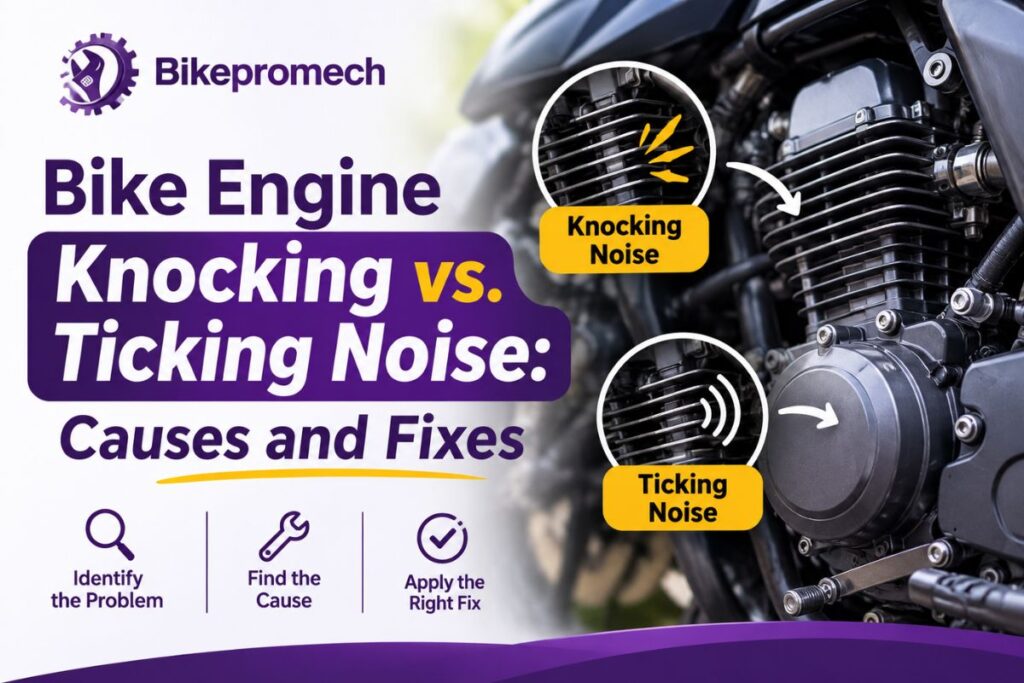
Engine knocking is a deep, heavy thud or a sharp metallic “ping” that often gets worse under load, and it can point to detonation or worn bearings, which can wreck an engine. Ticking is a lighter, faster, rhythmic tap that follows engine speed, and it usually comes from the valve train, the cam chain, or low oil, which makes it cheaper and easier to fix. If the sound is a deep knock that rises with revs, stop riding and get the bike checked before you go further.
This guide helps you tell the two apart by sound, timing, and conditions, explains what each one usually means, lists the fixes and typical costs, and shows when a noise is harmless.
Quick Comparison: Knocking vs. Ticking
| Feature | Knocking | Ticking |
| Sound | Deep thud, heavy knock, or sharp metallic ping | Light, fast, sewing-machine-style tap |
| Pitch | Low and heavy (rod knock) or sharp (pinging) | Higher and lighter |
| Rhythm | Follows engine speed, often louder under load | Follows engine speed, often constant at idle and rising with revs |
| Typical trigger | Acceleration, climbing hills, hard throttle, or a warm engine | Cold start, idle, or all the time |
| Common causes | Detonation, bad fuel, worn rod bearings, piston wear, low oil pressure | Valve clearance, cam chain or tensioner, low or dirty oil, exhaust leak |
| Seriousness | Often serious, can be urgent | Usually minor to moderate |
| Safe to keep riding? | Not if it is a deep knock | Short term, if oil level is correct, until you get it checked |
What Does a Knocking Sound in a Bike Engine Mean?
Knocking falls into three main types, and each has a different cause and urgency.
1. Pinging or Detonation (Sharp Metallic Ping)
This is a sharp, metallic ping or rattle, most noticeable when you accelerate hard or climb a slope. It happens when the fuel and air mixture ignites at the wrong moment instead of burning smoothly, which sends shock waves through the cylinder. Common causes include low-octane or poor-quality fuel, a lean air-fuel mixture, wrong spark timing, overheating, and heavy carbon deposits in the combustion chamber. Over time, detonation can damage the piston.
2. Rod Knock (Deep, Heavy Thud)
Rod knock is a deep, rhythmic thump from the lower part of the engine that speeds up as the revs rise. It means the connecting rod bearing has worn and the rod is moving too freely on the crankshaft. Dirty oil, low oil level, and low oil pressure are the leading causes. This is the most serious knock, because the engine can fail completely if you keep riding.
3. Piston Slap (Hollow, Clattering Knock)
Piston slap is a hollow, muffled or bell-like clatter that is loudest when the engine is cold and at idle, and it often fades as the engine warms up and the piston expands. It comes from too much clearance between the piston and the cylinder wall. A slap that continues once the engine is warm points to wear that needs a proper inspection.
What Does a Ticking Sound in a Bike Engine Mean?
Ticking is far more common, and in most cases it is much cheaper to fix.
1. Valve Clearance Out of Spec
A rhythmic tick from the top of the engine usually means the gap between the valve and its rocker or tappet has grown too large. It ticks once for every two crankshaft revolutions per valve, so it speeds up smoothly as the revs rise. Adjusting the valve clearance to the manufacturer’s spec normally silences it.
2. Low or Dirty Engine Oil
Oil carries lubrication to the valve train. When the level is low or the oil has broken down, the parts run dry and the ticking gets louder, often worst at cold start. Checking the level and changing the oil is the first thing to do. See our guide on how to know if your bike needs an oil change.
3. Cam Chain or Tensioner Wear
A worn timing chain or a weak tensioner produces a light rattle or tick from the side of the engine, often most obvious at idle. This noise should not be ignored, since a loose chain can jump or break. Replacement is a moderate repair.
4. Exhaust Leak
A tick at cold start that fades as the engine heats up often comes from a leaking exhaust gasket at the cylinder head, because the metal expands and seals the gap once it is warm.
5. Piston Pin or Ring Noise
A metallic double-tap from inside the engine can indicate wear at the piston pin, and it needs inspection.
Is the Noise Even From the Engine? Other Sounds That Get Mistaken
| Sound | Real Source | How to Tell |
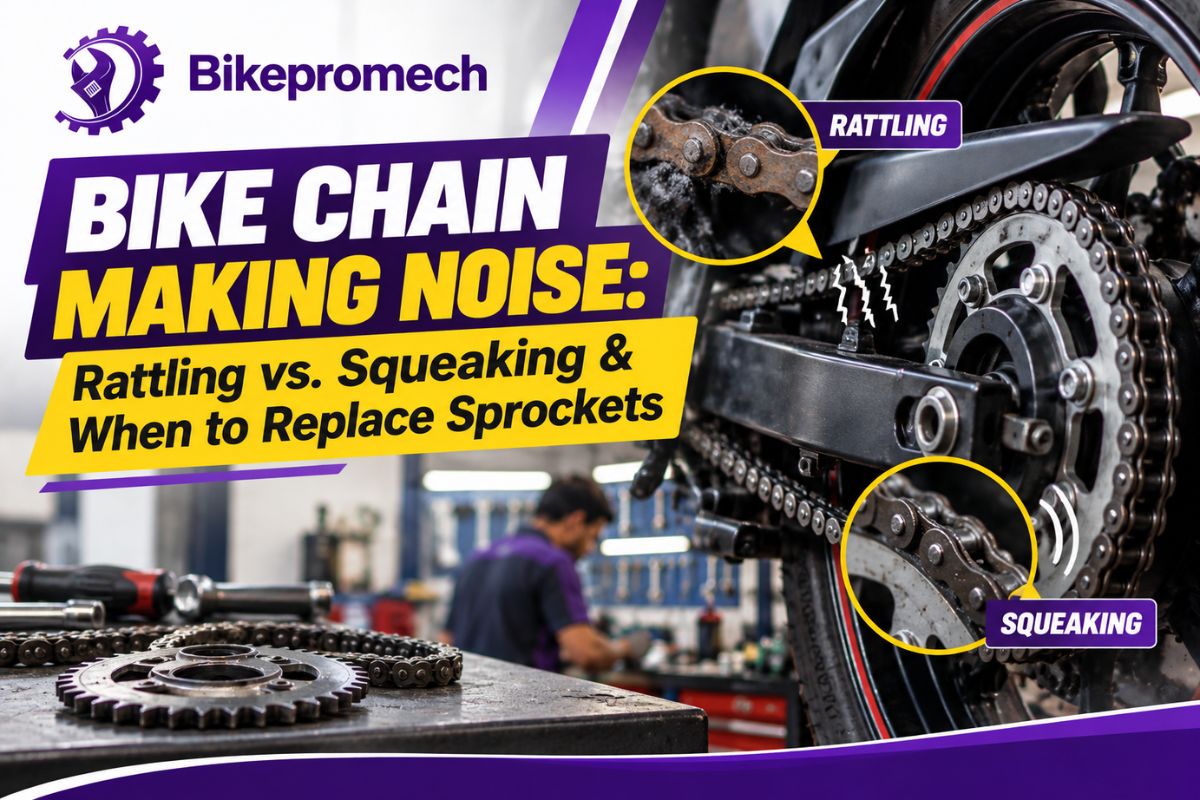
| Ticking that follows road speed, not engine speed | Dry or worn drive chain | Stays the same in neutral, changes with wheel speed |
| Rattle at idle in neutral that stops when you pull the clutch lever | Clutch basket noise | Disappears when the clutch is pulled in. See signs your bike clutch plate is worn out |
| Faint tick or click on fuel-injected bikes | Fuel injectors and pump working normally | Constant, soft, and unchanged over time |
| Whirring or humming near the tank | Fuel pump priming | Stops after a couple of seconds |
| Tick from the exhaust as it cools after a ride | Metal contracting | Stops once the engine cools |
How to Diagnose the Noise Yourself (5-Step Check)
- Check the oil level first. Park the bike upright on level ground, let the engine cool for a few minutes, and read the dipstick or sight glass. Low oil explains many ticks and some knocks.
- Note when it happens. Write down whether it appears cold, warm, at idle, under load, or only on acceleration.
- Run the neutral test. Rev the engine in neutral. If the noise follows the revs, it is inside the engine. If it follows road speed instead, check the chain, wheels, and brakes.
- Do the clutch test. With the engine idling in neutral, pull the clutch lever. If the noise vanishes, it is clutch related, not an engine knock.
- Try a fuel change. If you hear pinging under load, refuel at a reputable pump with a higher-octane grade and see whether it disappears.
Do not touch moving parts or hot components while listening, and never put a tool near the chain, sprockets, or belt while the engine runs.
Also read – HSRP for Two-Wheelers
Should You Keep Riding? A Severity Guide
| Sound | Urgency | What to Do |
| Deep, rhythmic knock that rises with revs | Stop now | Switch off, do not ride, arrange roadside assistance or a doorstep inspection |
| Sharp ping under load | Soon | Change fuel grade, avoid hard throttle, get timing, plug, and carbon checked |
| Cold-start slap that fades when warm | Soon | Book an inspection, check oil level and grade |
| Light, steady tick, correct oil level | Moderate | Book a valve clearance and oil check this week |
| Ticking that is getting louder over days | Soon | Treat as worsening wear, inspect before it spreads |
If the bike stops mid-ride with a loud knock, our roadside assistance service can reach you rather than risking further riding.
Causes and Fixes at a Glance
| Cause | Typical Noise | Typical Fix | Rough Cost Range |
| Low or dirty oil | Ticking, sometimes knocking | Oil and filter change, correct grade | Low |
| Valve clearance out of spec | Rhythmic top-end tick | Valve clearance adjustment | Low to moderate |
| Worn spark plug or wrong heat range | Ping, rough running | Plug replacement | ₹100–₹400 |
| Poor or low-octane fuel | Pinging under load | Switch to a reputable pump and higher-octane grade | Cost of fuel |
| Carbon buildup | Ping, hot-engine knock | Decarbonizing and tune | Low to moderate |
| Cam chain or tensioner wear | Rattle or tick | Chain and tensioner replacement | ₹1,500–₹5,000 |
| Piston and ring wear | Slap, tick | Piston and ring replacement | ₹2,500–₹8,000 |
| Rod or crank bearing wear | Deep knock | Bearing or crankshaft work | ₹5,000–₹15,000 |
| Full internal damage | Heavy knock and power loss | Engine overhaul | ₹8,000–₹25,000+ |
These are general India-wide ranges that vary by bike, city, and whether genuine or aftermarket parts are used. Our bike engine repair cost in India guide breaks these down by bike category.
Why City Riding Makes Engine Noises More Likely
Stop-and-go traffic keeps engines at low speeds with little airflow, so they run hotter and burn fuel less cleanly. Short trips never let the engine fully clear carbon, and hot summers in cities such as Chennai, Hyderabad, and Gurgaon add heat stress, all of which raises the odds of pinging and oil breakdown. Regular servicing and the right oil are the best defense. See our guides to the best engine oil for bikes and the Royal Enfield Classic 350 engine oil change interval for a model-specific example, and how to increase scooty mileage in city traffic, since a knocking engine also wastes fuel.
Does E20 Petrol Cause Engine Knocking?
Not typically. The Petroleum Ministry has said E20 has a higher octane rating and better anti-knock characteristics than regular petrol, as reported in this Telangana Today report on the ministry’s statement. If you hear pinging, look first at carbon buildup, timing, plug condition, and overheating rather than blaming the fuel.
Also read – How E20 Petrol Affects Your Bike’s Mileage and Engine
How to Prevent Knocking and Ticking
- Change oil on time, with the right grade. Old oil is the single biggest cause of valve and bearing noise.
- Check the oil level every 500–1,000 km. Low oil is a fast route to a serious knock.
- Fill up at reputable pumps. Poor fuel feeds detonation.
- Keep the air filter clean and the plug in good condition. Both keep the mixture and spark right.
- Follow the service schedule. Our quick bike service checklist covers the checks that catch wear early, and what a basic two-wheeler service includes explains what you are paying for.
- Keep fuel-injected systems clean. A clogged throttle body can upset the mixture. See why a throttle body is used in a motorcycle engine.
- Don’t lug the engine. Riding in too high a gear at low revs raises combustion stress and encourages pinging.
- Warm the engine gently. Let it settle for a few seconds after a cold start instead of revving hard.
For a technical explanation of how knock, pre-ignition, and valve-train noise arise, see this AMSOIL breakdown of engine knock, tick, and ping.
Does Engine Noise Affect Warranty or Insurance?
On a bike still under warranty, an unusual engine noise should go to the manufacturer’s network first, since repairs done elsewhere can complicate a claim. Our comparison of local mechanic vs authorized service center for bikes explains the trade-offs. On insurance, wear-related noise is normally not claimable, but an engine protection add-on can cover certain damage such as water ingress. Check the terms in our guide to the best bike insurance plans in India.
Trusted Parts and Honest Diagnosis
Noise diagnosis only helps if the repair uses the right parts. At BikeProMech, every part is quoted and approved by you before it is replaced, and genuine parts are confirmed before fitting. Routine causes such as oil, filters, and plugs fall under periodic service, while deeper issues go to engine repair. See the full list on our services page.
Get the Noise Checked at Your Doorstep
If you can describe the sound, a mechanic can usually narrow it down fast. Book a BikeProMech doorstep visit for a ₹199 visit charge, with the diagnosis and estimate shared before any work begins. Learn how it works in how doorstep bike service works, whether doorstep bike service is safe, and the advantages of bike repair at home. If the noise comes with a no-start, read bike not starting: common causes and fixes and how to check bike battery health.
BikeProMech serves riders across India. Find your city:
- Doorstep bike service in Bangalore and bike service at home in Bangalore
- Online bike service in Hyderabad
- Best bike service in Coimbatore
- Doorstep bike service in Pune
- Best bike service in Gurgaon
- Best bike service in Chennai
Scooter owners can check service pricing in our Honda Activa 6G/125 service cost 2026 guide, and riders comparing models can browse the best-selling two-wheelers in India.
Frequently Asked Questions
Knocking is a deep thud or sharp metallic ping that tends to worsen under load and can signal detonation or worn bearings. Ticking is a lighter, faster tap that follows engine speed and usually comes from the valves, the cam chain, or low oil.
Usually it is less serious than knocking. If the oil level is correct and the tick is steady, it is often a valve clearance or oil issue, but a tick that worsens over days should be inspected soon.
Not if the knock is deep and rhythmic. A deep knock that rises with revs can mean a worn rod bearing, and continuing to ride can destroy the engine. A sharp ping under load is less urgent but still needs attention.
Oil is thicker and has not fully reached the top end, and clearances are larger before the metal expands. A cold-start tick that fades once warm is often mild, but check the oil level and grade.
Yes. Low-octane or poor-quality fuel can ignite too early and cause pinging, especially under hard acceleration or on slopes. Try a reputable pump and a higher-octane grade.
It ranges from a few hundred rupees for a plug or oil change to ₹5,000–₹15,000 for bearing work, and ₹8,000–₹25,000 or more for an overhaul, depending on the cause and the bike.
It may quiet a tick temporarily, but it does not fix worn parts, and the wrong grade can harm lubrication. Use the grade in your manual and fix the underlying cause.